

- A total solar eclipse will pass over Texas in 2024:
- The Great American Eclipse
- When and Where to View the Eclipse
- How to View an Eclipse Safely
- The Great American Eclipse
On Monday, April 8, 2024, a total solar eclipse will cover a broad swath of Texas and the United States in dusklight. A total solar eclipse only occurs once every few hundred years, so take advantage of this opportunity to witness one of the rarest astronomical phenomena.
The Great American Eclipse
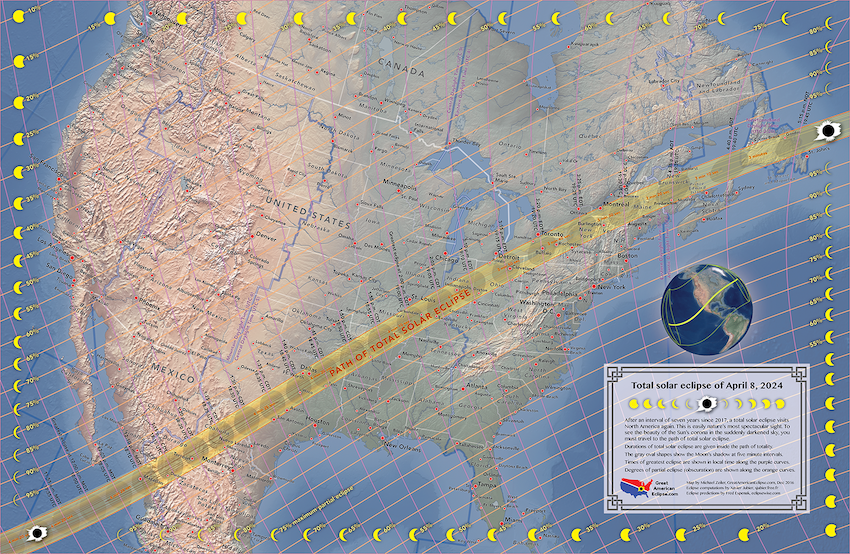
In 2024, the moon, earth, and sun will perfectly align to completely block the Sun’s radiant disk, creating darkness during the day. The event will cover major metropolitan areas in Texas, including Forth Worth, Dallas, Austin, and some of San Antonio.
Based on the predicted path of the 2024 eclipse, the penumbra—the shadow cast outside the path of totality—is expected to cover a significant portion of the United States. It will span from the southwestern states, including parts of Texas and New Mexico, moving northeast through states such as Oklahoma, Arkansas, Missouri, Illinois, Indiana, Ohio, New York, Vermont, and New Hampshire before finally crossing into eastern Canada. The extent of the penumbra’s coverage will depend on various factors, such as the observer’s location and atmospheric conditions.
When and Where to View the Eclipse
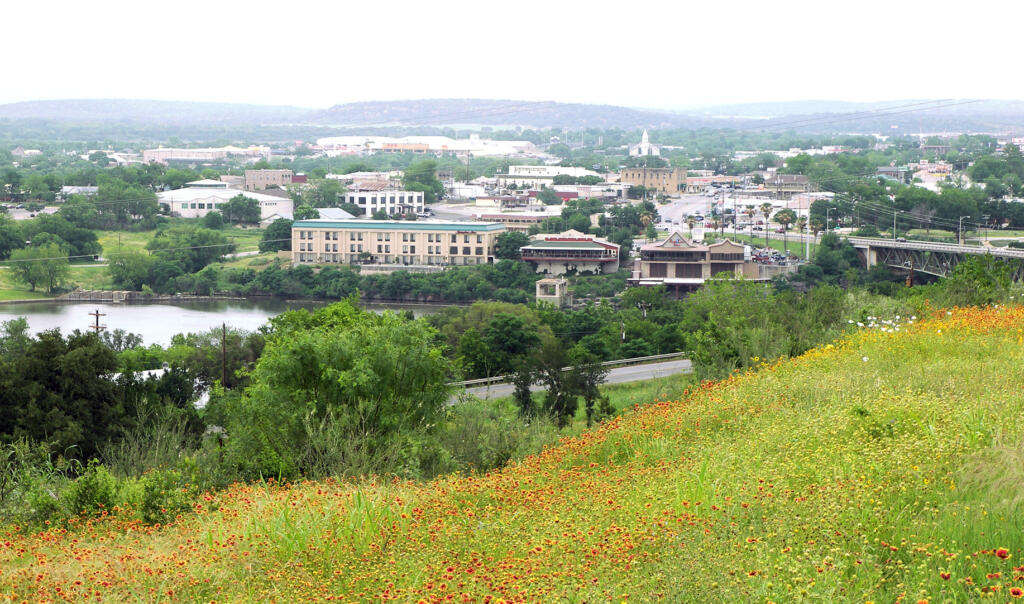

While all of the lakes in the Texas Highlands are within the path of totality, the center of the eclipse passes directly through Lake Buchanan in Burnet County, making it the perfect viewing locale — technically. As you await the moon’s shadow, enjoy all the region’s offerings in Marble Falls, Kingsland, and Horseshoe Bay. Burnet County is planning an eclipse-viewing event but has not yet provided information. Nearby Reveille Peak Ranch, in Burnet, will host a music, art, technology, and camping festival.
While the process can last hours, experts have calculated the eclipse to occur at 1:30 PM CST, and totality lasts between 10 seconds and 7.5 minutes. The event will likely draw crowds of thousands across the state and will only last for a while, so secure your spot now. But while you enjoy this rare event, be wary of the sun’s glint off the lake — even Isaac Newton burned his retinas trying to watch the eclipse via its reflection off of a pond.
How to View an Eclipse Safely
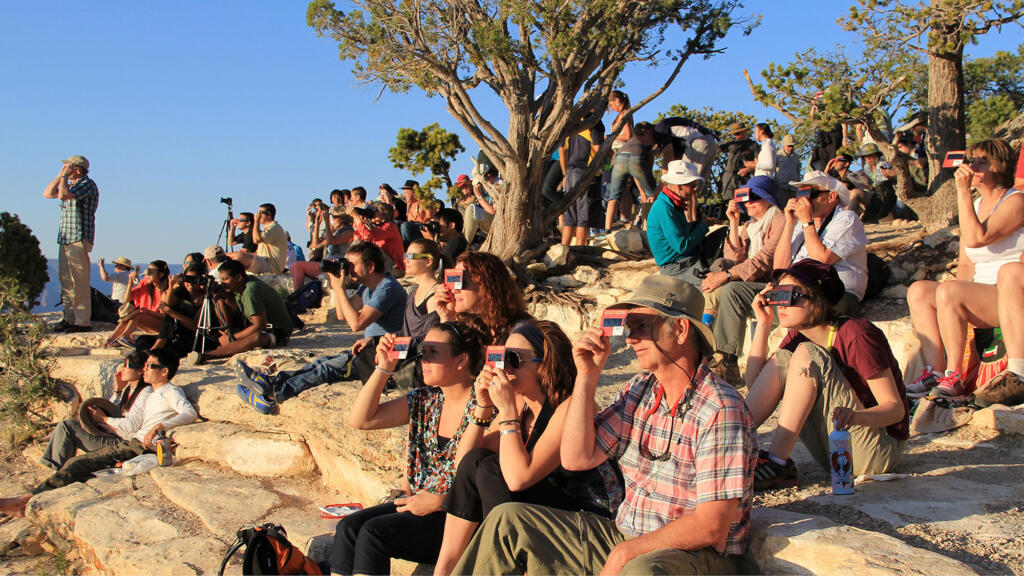
Direct Viewing
Teachers warn students from a young age not to look directly at an eclipse because the concentrated sunrays will cause harm to the eyes. Through direct and indirect viewing, there are safe ways to watch an eclipse. To look directly at an eclipse, onlookers need a darkened filter through which to see, such as eclipse glasses or a handheld solar viewer. Regular sunglasses will not suffice. Never look directly at an eclipse; intense, concentrated light can burn retinas in seconds.
Your phone’s camera may seem like a good idea if you like proper viewing tools, but, like our eyes, cameras are not designed with eclipses in mind. This method risks not only your phone but your eyes as well. Depending on how long the camera is pointed at the sun, it can cause damage to lenses or burn out pixels on the screen, and light can reflect off the screen into your eyes — almost as bad as staring right at it! Even advanced cameras, binoculars, and telescopes require specialized solar filters to view eclipses and take pictures safely.
Indirect Viewing
Another way to watch and analyze eclipses is to look indirectly via a pin-hole projection. To create a pin-hole creation, take a piece of cardstock or an index card, and cut a small hole or square. From here, grab aluminum foil and tape it over the hole, and follow that by poking a needle-sized hole in the foil. Finally, place your hand-made “projector” over another piece of cardstock. This tool, which forces light through the gap, will allow you to see all eclipse phases via the umbra — the shadow cast by the moon.
Now that you know when, where, and how to view the eclipse, prep your viewing device and make your caravan plans to capture this celestial spectacle.